
The war in Iran, started by Israel and the US, has sparked the Middle East powder keg. Is Peace still possible for humanity? Where do we get lost and stuck?
 Everyone saw it happen.
On February 28, 2026, Israel and the US teamed up for a massive military strike against Iran. The US had already opened nuclear talks back on February 6 in Muscat, Oman. They wrapped up a third round of negotiations in Geneva on the 26th, then quickly suggested a fourth round in Vienna the very next day. But then, out of nowhere, both countries kicked off their joint assault—Israel called it Operation Roaring Lion, and the US named theirs Operation Epic Fury.
 Israel says that Iran can build a nuclear weapon almost right away. That’s their main reason for taking the action. The US, on the other hand, keeps shifting its story. Secretary of State Rubio changed his explanation more than once. In the end, he just pointed the finger at Israel, claiming that as soon as Israel starts fighting, US bases and people all over the Middle East become targets for retaliation. According to him, the US has to strike first to stay ahead.
Signs that humanity has lost its way
This conflict in the Middle East isn’t like anything we’ve seen before. It stands apart from the five major wars in the Middle East in the last century. Some media outlets are already calling it the 6th Middle East War. Those earlier wars—between 1948 and 1982—were massive battles between Israel and its Arab neighbors. This time, though, things feel very different.
- The first Middle East war broke out in 1948, right after Israel was re-established with British backing. Israel found itself surrounded by Arab coalition forces but managed to hold its ground. After the fighting, Israel suddenly stood out as the main power in the region.
- The second war came in 1956, all because Egypt took control of the Suez Canal. Britain, France, and Israel teamed up and invaded, but they didn’t stick around long—they pulled out of the Sinai Peninsula afterwards. This whole mess brought the US and the Soviet Union directly into Middle East politics.
- The third war, better known as the Six-Day War, hit in 1967. Things kicked off when Egypt closed off the Strait of Gibraltar, which pushed Israel to act fast. In just a few days, Israel took over the West Bank, Gaza, the Golan Heights, and the Sinai Peninsula.
- The fourth war, the Yom Kippur War, started in 1973. Egypt and Syria launched a surprise attack to win back the Sinai Peninsula and the Golan Heights from Israel. The US and the Soviet Union got pulled in again, and for a while, it looked like their rivalry might spiral out of control.
- The fifth war, in 1982, started after someone tried to assassinate the Israeli ambassador in London, leaving him badly injured. The attacker belonged to the Abu Nidal Organization, which actually hated the Palestine Liberation Organization. Still, Israel used this incident as an excuse to go after the PLO and take a shot at weakening Syria’s influence in the region.
If you look at the years between these six conflicts, you get gaps of 8, 11, 4, 9, and then a huge jump—44 years between the 5th war in 1982 and the one in 2026. That last gap stands out. It’s way longer than any of the previous intervals.
But there’s more to it than just timing. The earlier Middle East wars had their share of targeted killings, but those strikes always went after guerrilla leaders or high-ranking commanders. This time, though, things went much further. In 2026, the operation didn’t just target another military figure—it killed Ali Khamenei, the Supreme Leader of Iran and a major spiritual figure across the Muslim world. Honestly, it’s hard to compare this to anything before it. The scale and the consequences, especially for international law, are on a different level.
 Think back to the 4th Middle East War in 1973, the Yom Kippur War. That one got dangerously close to triggering World War III and a nuclear showdown, right up there with the Cuban Missile Crisis. Now, with the 2026 conflict breaking out by assassinating Iran’s top leader—someone who’s both the head of state and a religious icon—the stakes shot up immediately. Suddenly, it wasn’t just about politics anymore; ideology and religion came crashing into the mix. The whole world’s still reeling from the shock.
Right now, there are nine countries in the world with nuclear weapons. The first five are the permanent members of the United Nations Security Council.
- The United States has about 5,117 nuclear warheads.
- Russia holds the biggest stockpile with roughly 5,459 warheads.
- China’s nuclear arsenal is growing fast and sits at around 600 warheads.
- France just announced plans to boost its arsenal beyond the current 290 warheads.
- The UK has about 225 warheads.
- India has around 180.
- Pakistan’s count is close behind at 170.
- North Korea keeps pushing its nuclear program forward and now has about 50 warheads.
- Israel sticks to its policy of silence—never confirming or denying anything. But most estimates put its arsenal at about 90 warheads.
Imagine this: the focus of global conflict moves from Russia and Ukraine over to the Middle East—a place that’s always been a powder keg, just waiting for a spark. When wars drag on and nobody wins fast, the people in charge—doesn’t matter if it’s one country or several—can lose their grip. Tensions boil over. At that point, reaching for nuclear weapons starts to seem almost inevitable.
Looking at how things are going, both Israel and the US miscalculated from day one. They figured Iran, with its tough defenses and unhappy population, would just fall apart under pressure quickly. After all, the regime’s clung to power for nearly half a century, mixing politics with religion, while Western sanctions have squeezed the country just as long. They thought Iran would crack from the inside.
But that’s not what happened. Taking out the spiritual leader didn’t break Iran—it did the opposite. Suddenly, public anger exploded, not just in Iran but all across the Islamic world. Any pro-Israel or pro-US voices quickly disappeared, and what’s left is a messy, unpredictable coalition. Strangely enough, it’s more effective than anyone expected—a new global force against both extremism and America has started to form.
If things keep heading this way, we’re looking at World War III—a true Armageddon. And this time, nuclear weapons could be on the table for real. The thought of that should make everyone stop and think hard about where we’re all heading. We can’t afford to stumble into another all-out, worldwide fight, especially not one that ends with nuclear destruction and nobody left standing.
Honestly, unless something changes in a big, almost miraculous way, a two-sided clash like this only has one ending—and it’s not a good one.
 Just ten days before the conflict broke out, on February 18, 2026, US Ambassador to Israel Michael Huckabee did something unexpected. He reached out to former Fox News anchor Tucker Carlson and asked him to come interview him at the Diplomatic Terminal in Ben Gurion Airport, Tel Aviv. Huckabee, who used to be a Southern Baptist pastor, now represents the US in Israel. And during this marathon interview—almost three hours—he didn’t hold back. Over and over, he hammered home one idea: According to the text in Genesis 15, God promised Abraham’s descendants the land stretching from the River of Egypt all the way to the Euphrates. Huckabee argued that, by that logic, Israel is justified—legally and morally—in taking whatever land it wants in the entire Middle East.
That’s a huge claim. Not something you can just brush aside.
So here we are, faced with some big questions. How should people read the Old Testament? Who actually counts as Abraham’s descendants, and who are God’s chosen people? These might sound like basic questions, but honestly, most Christians—even many pastors—struggle to answer them clearly. Now, thanks to Huckabee, the whole issue is out in the open.
Appearantly Huckabee was getting his arguments lined up, laying the groundwork for the US-Iran operation scheduled for ten days later. Carlson’s team uploaded the full interview to YouTube on February 20. We’ve pulled out a specific one-minute and forty-second clip that gets right to the heart of Huckabee’s argument.
Let’s get straight to the point: there are some big questions about those Old Testament promises, and we have to talk about them.
Everything changed when Jesus arrived. Matthew’s Gospel opens with a long list of names—42 generations from Abraham—ending with Jesus of Nazareth. He’s the real descendant, the true son, the Messiah. His life marks the end of Israel’s journey from Egypt to Canaan.
And here’s the thing: only people who are born again in Him—people who follow His example—can really be called God’s children. The New Testament talks about this a lot, but I’ll just pull one bit from Paul in Galatians 3:26–29.
Because of your faith in Christ Jesus, you’re all sons of God. All of you who were baptized into Christ have put on Christ. There’s no Jew or Greek, no slave or free, no male or female. You’re all one in Christ. If you belong to Christ, you’re Abraham’s seed. You’re heirs to the promise.
It’s simple and obvious, right? So why, in a country like the US—where faith in Christ appears to be everywhere, and presidents swear on Bibles—do so many people miss this?
Okay, maybe it’s forgivable if an average believer gets confused. But what about someone like Mike Huckabee? He used to be a Southern Baptist pastor; now he’s the ambassador to Israel, and yet he comes out with these wild statements right before a war? Seriously?
This just shows how clueless the American Christian community is on this issue.
 Let us be clear. This isn’t “replacement theory.” This is about integration—unity. God Himself made this happen through Jesus. He brought together people who lived under the law and those outside of it, and He made them one through Jesus’s death.
He tore down the wall that separated them. He ripped the veil that divided the Holy Place from the Holy of Holies. He made the two groups one. Jesus—the crucified, the risen—He’s the test. He’s how you know who truly belongs to God, who the real Israelites are.
If you don’t recognize Jesus as Messiah, you’re not counted among God’s chosen—at least not in this life. And you don’t get to claim that title just because your ancestors did. For people who don’t believe in Jesus, their place in the Kingdom of Heaven only gets sorted out after death. Labels don’t matter—what you call yourself, what others call you, none of that counts.
Only those recognized by God and His angels are truly His people.
This is exactly what Judaism, as a whole, has always pushed back against. And let’s be honest, the current Israeli government isn’t about to change that. Sure, they’ll work with Christians—even count on strong U.S. support, since most Americans are Christian. But at the end of the day, they see themselves as Abraham’s true descendants—more pure, more orthodox—and they still reject Jesus of Nazareth as that true heir.
That’s the reality. No one really escapes it.
But have we lost sight of this truth again? Is today’s Christian world starting to look a lot like it did when Jesus first showed up—so tangled up in interpretations that we’re just confusing everyone all over again?
And what about America? On the surface, the majority of people appear to have faith in Christ. But has it been pulled off course by Jews who, even after 2,000 years, still refuse to accept Jesus as the Messiah?
Yeah, it has.
Look at what’s happened: the destruction of the World Trade Center on September 11, 2001, Epstein’s so-called suicide in 2019, and the execution of Charlie Kirk during his public speech in 2025. These huge events tell us something. In each case, the crime scene was wiped clean or tampered with, and investigators got blocked at every turn.
So now, regular people online have stepped up. They’re digging for the truth, exposing the dark secrets and the powerful forces behind these events.
It actually lines up with what the New Testament says: “Don’t you know we will judge angels? How much more the things of this life?”
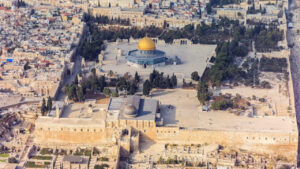 Let’s stop and really think about this. The modern state of Israel, built on a literal reading of the Old Testament rather than its deeper meaning—and actually going against the clear message of the New Testament—can we honestly call this country a true reflection of the Kingdom of Heaven on earth?
From the very start, they never accepted Jesus as the Messiah, and even now, nothing’s changed. Not only do they not believe in him, but they don’t even acknowledge him. So here’s the real question: can we still call them God’s chosen people under these circumstances?
Twice, the Israelites rebuilt God’s temple. Twice, it was burned down. Isn’t that enough of a sign?
For generations, Jews have dreamed of building the temple a third time. But why doesn’t God allow it? Why does He let the Dome of the Rock just stand there, unused by Jews, instead of allowing them to put up a new temple on that exact spot—or even next to it?
 And then there’s the Ark of the Covenant, probably the holiest object in the Old Testament. Back on January 6, 1982, at 2:00 pm, people found it in a cave beneath the site of Jesus’s crucifixion. The Israeli government knows all about it. They’ve got solid evidence—even blood samples from the Mercy Seat, and lab results.
If Israel really is the nation God approves through Jesus, how could they keep such a huge discovery under wraps for 44 years? That’s almost half a century!
Also, notice this: the Fifth Middle East War broke out on June 6, 1982—the same year the Ark was found, just five months later.
So here’s what we need to ask ourselves.
When Jesus first came, Judaism had already gotten tangled up in human reasoning and philosophy. That corruption never really stopped. Now, as we wait for Jesus to come again, will Christianity wind up just as lost, just as tangled up in human ideas, right before the end?
Look, I’m not saying nobody gets saved by grace. But we’re talking about the spiritual condition, health and depth of faith in America—and, really, the whole world.
This is the issue staring us in the face. We need to face it honestly and set out some clear principles.
This article tries to tackle it from a biblical perspective—specifically through the lens of Daniel and Revelation, using the approach of a remarkable scientist and theologian from three centuries ago: Emmanuel Swedenborg, born in 1688, died in 1772.
With his method, we’re aiming for a big-picture view of humanity’s spiritual condition—past, present, and future.
(Three more sections to be continued)